

Table of Contents
- Why Lightweight UPF Apparel Beats Sunscreen on Long Summer Days
- How UPF Ratings Work: What 50+ Actually Blocks
- The Benefits of Wearing UPF Apparel Beyond Sunburn Prevention
-
Best Sun Protection Shirts for Hiking, Fishing, and Off-Roading
- Men's Performance Hooded Long Sleeve: Best for All-Day Coverage
- Stay Dusty Men's Performance Long Sleeve: Best Value Long Sleeve
- Ladies Dusty Trail Long Sleeve: Best Contoured Women's Fit
- Dusty Trail Guide UPF Shirt: Best for Fishing and Casting
- Dusty UPF 50+ Catching Sunsets Hoodie: Best for Layering in Heat
- How to Choose UPF Clothing That Fits Your Adventure
- UPF Degradation: Does Sun Protection Fade After Washing?
- Synthetic vs. Natural Fabrics: Environmental Trade-offs in UPF Gear
- Conclusion
- Frequently Asked Questions
Last Updated: September 21, 2026
Why Lightweight UPF Apparel Beats Sunscreen on Long Summer Days
Sunscreen wears off, sweats off, and needs reapplying every couple of hours. Lightweight UPF apparel for summer adventures solves that before you leave the truck: the fabric blocks UV radiation for the life of the garment, so protection doesn't fade at mile eight.
How UPF Ratings Work: What 50+ Actually Blocks
Ultraviolet protection factor (UPF) measures how much UV radiation passes through a fabric to your skin. UPF 50 blocks roughly 98% of UV rays, UPF 30 about 97%, a small gap that adds up over hours.
The Benefits of Wearing UPF Apparel Beyond Sunburn Prevention
Sunburn is the visible problem; cumulative UV exposure is the quieter one. Dermatologists link repeated sun exposure to premature skin aging and elevated skin cancer risk, which is why sun-protective clothing has moved from niche fishing gear to mainstream outdoor apparel.
The practical benefits go further:
- Cooler core temperature through moisture-wicking fabric that moves sweat off your skin
- Fewer interruptions because you're not stopping to reapply lotion
- Consistent coverage on your neck, ears, and hands, the spots people miss most
- One less thing to pack when your shirt is your sun protection
Mechanical vs. Chemical UPF: Why the Distinction Matters for Sensitive Skin
Mechanical (inherent) UPF protection comes from the fabric itself, knit or weave tightness, fiber type, color, and construction density. The barrier is physical: it doesn't wash out, leave residue, or rely on added chemistry. Densely knit polyester, nylon, and tightly woven natural fibers can all achieve high UPF mechanically.
The Benefits That Actually Compound
That's the part most benefit lists skip: the durability of the protection itself is a benefit. A shirt that still blocks 98% of UV after three seasons beats one that hit UPF 50+ on day one and quietly dropped off by August.
Best Sun Protection Shirts for Hiking, Fishing, and Off-Roading
The best sun protection shirts for hiking, fishing, and off-roading balance three things: a real UPF rating, breathable fabric, and a fit that doesn't fight your movement. Here are five picks from the Dusty Gear Co UPF line.
| Shirt | Price | Protection | Best For |
|---|---|---|---|
| Men's Performance Hooded Long Sleeve | $49.99 | UPF 50+ | All-day coverage |
| Stay Dusty Men's Performance Long Sleeve | $39.99 | UPF 50+ | Value pick |
| Ladies Dusty Trail Long Sleeve | $39.99 | UPF 50+ | Contoured women's fit |
| Dusty Trail Guide UPF Shirt | $68.00 | UPF 30+ | Fishing and casting |
| Catching Sunsets Hoodie | $49.99 | UPF 50+ | Layering in heat |
Men's Performance Hooded Long Sleeve: Best for All-Day Coverage
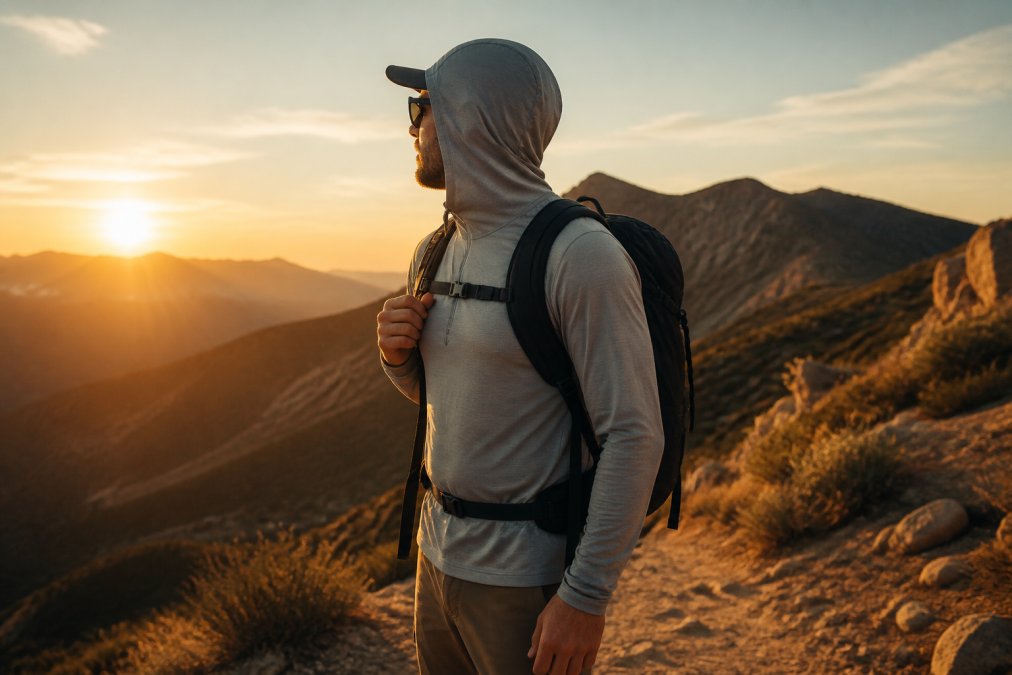
Grab this one when your calendar is booked with sunshine. The UPF 50+ Dusty Men's Performance Hooded Long Sleeve pairs performance microfiber with a hood, covering your neck and ears without a separate hat.

Stay Dusty Men's Performance Long Sleeve: Best Value Long Sleeve
At $39.99, the Stay Dusty Men's UPF 50+ Performance Long Sleeve is the value pick, built for long days and durability that survives fishing, biking, mowing, and a dirt road you've never taken before.

Ladies Dusty Trail Long Sleeve: Best Contoured Women's Fit
The Ladies Dusty Trail UPF 50+ Long Sleeve offers a contoured fit with unrestricted mobility plus lightweight breathable fabric and strong moisture management.

Dusty Trail Guide UPF Shirt: Best for Fishing and Casting
Casting demands shoulder mobility, and the Dusty Trail Guide UPF Shirt delivers with lightweight four-way stretch. Rated UPF 30+, it still blocks the large majority of UV and works for hiking, fishing, or wandering from trailhead to brewery.
Dusty UPF 50+ Catching Sunsets Hoodie: Best for Layering in Heat
Layering in extreme heat sounds contradictory until you've been on a ridgeline at 6 a.m. and again at 4 p.m. The Dusty UPF 50+ Catching Sunsets Hoodie is lightweight as a single layer, breathable for movement, and durable for long days under open sky.
How to Choose UPF Clothing That Fits Your Adventure
Choosing UPF clothing means matching coverage to your activity, climate, and time outside. Start with the rating, then work backward to fabric and fit.
- Confirm the UPF rating is on the label (UPF 30+ minimum, UPF 50+ for long exposure)
- Check the fabric weight for your season: lighter knits for peak summer, midweight for shoulder season
- Pick long sleeves or a hood if your neck, ears, or arms burn easily
- Test the fit through the shoulders, since casting and climbing need range of motion
- Consider color: darker and denser fabrics generally block more UV
- Plan for layering if temperatures swing from morning to afternoon
- Size down in women's fits if you want a contoured silhouette
Layering for Extreme Heat: A System, Not a Single Shirt
Most guides treat a sun shirt as a standalone item. In real desert, canyon, and high-altitude conditions, it's one part of a system: keep direct sun off your skin while still letting sweat evaporate.
How to Tune the System to the Conditions
- Desert and canyon country: lightest possible sun layer, light color, loose fit, hood up, wide-brim hat, sun gloves. Prioritize airflow over insulation.
- High altitude: same system, but add a thin insulating layer you can pull on at dawn and stash by mid-morning. UV intensity rises with elevation, so coverage matters more, not less.
- Humid heat: moisture management is the priority. Choose the thinnest wicking base you own and a sun layer that dries in minutes, not hours.
- Water and river days: UV reflects off water and sand. Cover the underside of your chin and the tops of your hands, which are the two spots reflection burns first.
Fit Details That Decide Whether You'll Actually Wear It
A sun shirt you leave in the truck protects no one. Three fit checks matter more than any spec sheet:
- Shoulder and arm range: raise your arms overhead and reach across your body. If the shirt pulls at the shoulders or rides up at the waist, size up. Casting, climbing, and paddling all need that range.
- Hem length: a hem that stays put when you bend over keeps your lower back covered. Short hems expose the spot people forget to protect.
- Hood and collar: a hood should sit flat when down and cover the back of your neck when up. A collar that gaps lets sun in at the one spot you can't see.
UPF Degradation: Does Sun Protection Fade After Washing?
UPF protection in synthetic fabrics generally holds up well. Some garments can lose protection as treatments wash out, while densely knit or woven synthetics keep blocking UV because the barrier is physical.
Synthetic vs. Natural Fabrics: Environmental Trade-offs in UPF Gear
Synthetic fabrics like polyester dominate UPF apparel because they're durable, quick-dry, and easy to engineer for high UV blocking, but they're petroleum-based and shed microfibers in the wash.
Conclusion
The hardest part of a long summer day outside isn't the trail or the river. It's staying protected without constantly stopping to reapply. Lightweight UPF apparel for summer adventures removes that friction entirely, so you can stay out longer and worry less.
Frequently Asked Questions
What does UPF rating mean for clothing?
UPF, or ultraviolet protection factor, measures how much UV radiation a fabric blocks. A UPF 50 rating means only 1/50th of UV rays pass through, blocking about 98%. UPF 30 blocks roughly 97%. The higher the number, the longer you can stay in the sun before skin damage occurs. Look for UPF 50+ on labels when choosing lightweight UPF apparel for summer adventures, especially for long days hiking, fishing, or off-roading.
Is lightweight UPF apparel actually effective in high heat?
Yes. Lightweight UPF apparel is designed to block UV rays while letting air move through the fabric. Performance microfiber and moisture-wicking materials pull sweat away from your skin and dry quickly, so you stay cooler than you would in a heavy cotton shirt. Long sleeves and hoods add skin coverage without adding heat when the fabric is breathable and quick-dry.
Does washing UPF clothing reduce its sun protection?
It depends on the fabric. Some garments can lose protection over time. To extend the life of your UPF gear, wash in cold water, avoid fabric softeners, and skip the dryer when possible. Check the care label on your specific shirt for guidance.
What is the difference between SPF and UPF?
SPF, or sun protection factor, rates sunscreen and how long it protects skin before burning. UPF rates fabric and how much UV radiation passes through it. SPF needs reapplying every two hours; UPF protection is built into the shirt and lasts as long as you wear it. That is why many outdoor enthusiasts pair sunscreen on exposed skin with UPF apparel for reliable, all-day coverage.
How many layers of UPF clothing do I need for summer?
One well-made UPF 50+ layer usually provides enough protection for most summer activities. Layering becomes useful when you want versatility: a lightweight hoodie over a performance tee lets you adjust coverage as temperatures shift from cool mornings to hot afternoons. Focus on breathable, moisture-wicking fabrics so added coverage does not mean added heat.