

Table of Contents
- What Makes a UPF Hiking Shirt Worth Buying
- Dusty Gear Co UPF Hiking Shirts Compared
- Best Sun Hoodies for Hiking in High-Exertion Conditions
- How to Care for UPF Clothing So Protection Lasts
- Long-Sleeve vs. Short-Sleeve Sun Protection on the Trail
- Layering, Repairability, and Climate-Specific Picks
- Conclusion
- Frequently Asked Questions
Last Updated: October 2, 2026
What Makes a UPF Hiking Shirt Worth Buying
The best UPF hiking shirts earn their place in your pack by combining certified sun protection with fabric that survives repeated washings, abrasion, and long days on the trail. This guide from Dusty Gear Co breaks down what the ratings mean, how fit and fabric affect performance, and which styles hold up best for hiking, fishing, and off-road miles.
UPF rating explained: what the numbers actually mean
UPF 30 blocks about 97% of UV rays, while UPF 50 blocks about 98%. The jump from 30 to 50 sounds small, but for long exposure it matters, especially on high-altitude trails or water where reflection intensifies exposure.
Dusty Gear Co UPF Hiking Shirts Compared
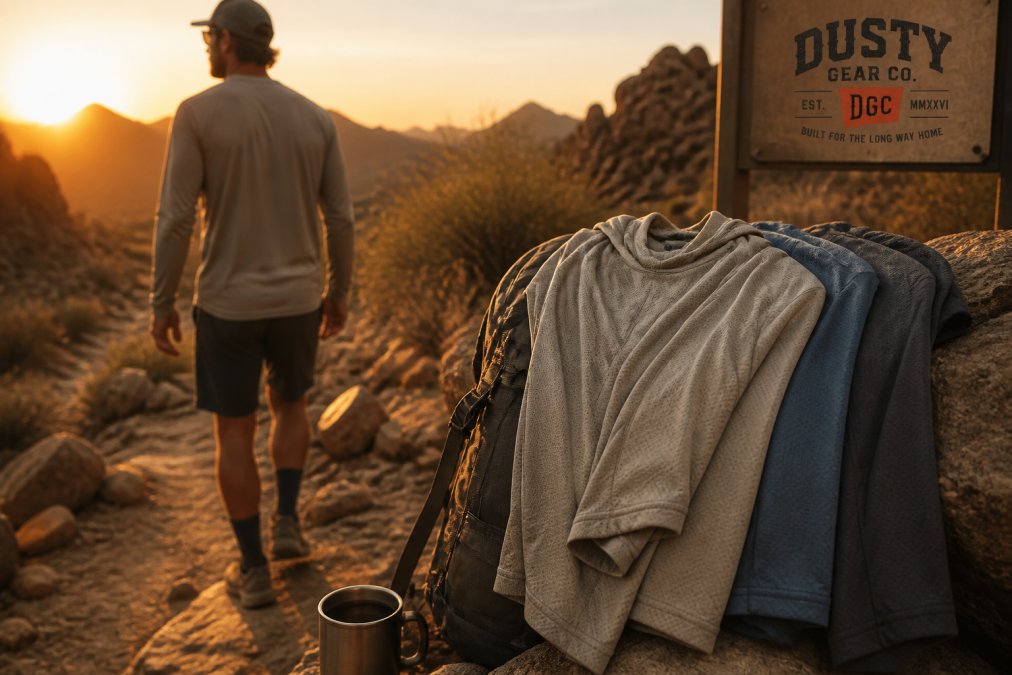
Dusty Gear Co builds its UPF line around the same idea: one shirt that handles sun, sweat, and miles without falling apart. Every style below is UPF-rated and made for long days outside, whether you're hiking, fishing, or just taking the long way home.
Pricing and specs at a glance
| Shirt | Price | Protection | Best For |
|---|---|---|---|
| The Dusty Trail Guide UPF Shirt | $68.00 | UPF 30+ | Everyday trail and town wear |
| UPF 50+ Dusty Men's Performance Hooded Long Sleeve | $49.99 | UPF 50+ | Full coverage with hood |
| The Stay Dusty Men's UPF 50+ Performance Long Sleeve | $39.99 | UPF 50+ | All-day versatility |
| The Dusty UPF 50+ Signature Men's Performance Long Sleeve | $39.99 | UPF 50+ | High-exertion, lightweight wear |
| Dusty UPF 50+ Coastal Men's Performance Long Sleeve | $39.99 | UPF 50+ | Fishing and backroad days |
| The Ladies Dusty "Staple" UPF 50+ Performance Tee | $29.99 | UPF 50 | Women's everyday trail wear |
The Trail Guide tee uses four-way stretch fabric for unrestricted movement, which suits casting, climbing, and scrambling. The Hooded Long Sleeve adds a hood for neck and ear coverage, a detail that matters on exposed ridgelines. The Signature Performance Long Sleeve runs ultra-light at 3.5 oz with moisture-wicking and odor control, and the Coastal Long Sleeve is cut for a relaxed fit that layers easily.

Best Sun Hoodies for Hiking in High-Exertion Conditions
A sun hoodie wins on high-exertion days because it covers your neck, ears, and the back of your hands without adding a separate hat and buff. The UPF 50+ Dusty Men's Performance Hooded Long Sleeve is the pick here: performance microfiber fabric stays breathable and quick-drying, so sweat moves off your skin instead of soaking the shirt.

How to Care for UPF Clothing So Protection Lasts
Washing UPF clothing correctly keeps its protection intact far longer than most people expect. The American Academy of Dermatology's sun protection advice recommends treating sun-protective garments as everyday gear, which means regular washing without harsh treatments that break down the fabric.
- Wash in cold water on a gentle cycle
- Skip fabric softener, which coats fibers and reduces performance
- Avoid bleach and harsh detergents
- Air dry when possible, or tumble on low
- Store folded, not stretched on a hanger, to protect the fabric's shape
- Check for thinning or pilling at high-wear spots like shoulders and elbows
Long-Sleeve vs. Short-Sleeve Sun Protection on the Trail
Long sleeves beat short sleeves for sun protection on almost every trail, because forearms take direct UV exposure for hours. A long-sleeve UPF shirt removes that exposure entirely, and modern performance fabric doesn't feel hotter than a tee when it's light and breathable. The mechanism matters: tightly woven or knit synthetic fibers scatter and absorb UV before it reaches skin, and a long sleeve simply extends that barrier over real estate a tee leaves bare.
What the coverage math actually looks like
A UPF 50 fabric lets roughly 1/50th of UV through. That number only applies to the fabric that's actually covering you. A short-sleeve shirt leaves the forearms, and often the neck and ears, uncovered, so your real-world protection is a mix of UPF fabric and whatever sunscreen is still on those zones. On a six-hour exposed hike, that's a lot of reapplications versus zero for a long sleeve.
Heat: the objection that doesn't hold up
Most hikers assume long sleeves run hotter. In direct sun, the opposite is often true. Bare skin absorbs solar radiation and heats up; a light, breathable long sleeve blocks that radiation and lets sweat evaporate through the fabric. The catch is fabric weight and weave. A heavy cotton long sleeve will cook you. A 3.5 oz performance knit like the Signature Long Sleeve moves moisture and air well enough that many hikers forget they're wearing sleeves at all.
When short sleeves win
- Deep shade or short outings: If you're under canopy for most of the hike, forearm exposure is minimal.
- High humidity with low sun angle: When airflow is the priority and UV load is lower, a tee can feel better.
- Layering flexibility: A tee layers under a button-down or shell without bulk, though it offers less standalone protection.
| Factor | Long Sleeve | Short Sleeve |
|---|---|---|
| Sun coverage | Full arms, no reapplication | Forearms exposed |
| Heat in full sun | Cooler with light fabric | Hotter skin, more burn risk |
| Layering | Works as a base layer | Limited layering use |
| Best for | All-day exposure, high altitude | Short, shaded hikes |
Layering, Repairability, and Climate-Specific Picks
Layering compatibility and repairability are the two factors most buyers ignore, and both decide how long a shirt actually lasts. A UPF long sleeve works as a base layer under a shell in cool mornings, then stands alone once the day warms up. That versatility means fewer shirts doing more work.
Layering without wrecking the fabric
A sun shirt under a backpack takes more abuse than most people realize. Chest straps and hip belts rub the same spots mile after mile, and that friction is what thins fabric and wears through seams. A few habits extend the life of a shirt that lives under a pack:
- Smooth the interface: Flatlock seams and snag-resistant knits slide under straps instead of catching. Delicate raised textures and loose knits abrade faster.
- Adjust straps before you load up: Tightening a hip belt or sternum strap against a shirt already stretched over your shoulders can pinch and distort the fabric.
- Rotate high-wear zones: If you carry a pack most days, the shoulders and lower back take the hit. Giving a shirt a rest day between heavy pack days lets fibers recover and reduces concentrated wear.
- Watch the collar and hood: Hood cords and zipper pulls can snag the neckline. Tucking a hood or stowing cords reduces that risk.
Repairing a technical sun shirt instead of replacing it
This is where most guides stop, and it's the gap worth claiming. A sun shirt that snags or tears usually doesn't need to be retired, it needs a patch. The goal is to restore coverage without stiffening the fabric or blocking breathability.
- Small snags and pulls: Don't cut them. Use a small drop of flexible fabric glue or a tiny dab of clear nail polish on the back side to lock the fiber in place, then let it cure. Cutting a pull creates a hole that grows.
- Pinholes and small tears: A peel-and-stick nylon or polyester repair patch (the kind sold for tents and puffy jackets) bonds to most performance knits. Trim the patch to a rounded shape so corners don't lift, and press it on a clean, dry surface.
- Seam separation: A simple hand stitch with polyester thread matched to the fabric color, using a backstitch, holds better than a running stitch on stretchy knits. Avoid cotton thread, which doesn't stretch with the fabric.
- Zipper and hood hardware: If a zipper pull breaks, replacing the pull is usually enough. A stuck zipper often just needs a graphite pencil rubbed along the teeth rather than a full replacement.
Climate changes the pick
- Arid desert and high altitude: Dry air evaporates sweat fast, so the priority is blocking radiant heat and covering skin. Go UPF 50+, hood coverage, and light colors that reflect rather than absorb heat. A slightly denser weave is fine here because evaporative cooling works well.
- Humid lowlands: Sweat doesn't evaporate as readily, so the fabric has to move moisture away from skin or you'll stay clammy. Choose the lightest quick-dry knit you can find, like the 3.5 oz Signature, and favor open weaves over tight ones.
- Cool mornings and gusty ridges: A long sleeve doubles as a light wind layer, so the Coastal or Stay Dusty styles earn their keep. The same fabric that blocks UV also cuts wind chill on an exposed ridge.
For families gearing up for shared day hikes, sizing and fit across the line let adults and kids match without hunting for separate brands. Free shipping on orders over $120 makes it easier to kit out the whole crew at once.
Conclusion
Finding sun protection that survives real trail abuse is harder than it should be, and most gear either blocks UV well or lasts, rarely both. Dusty Gear Co builds UPF-rated apparel for exactly that gap: veteran-owned, made for hiking, fishing, and off-road miles, with UPF 50+ protection, moisture-wicking performance fabric, and durable construction that holds up wash after wash. Shop Dusty and gear up for the long way home.
Frequently Asked Questions
What is the difference between UPF and SPF clothing?
UPF, or ultraviolet protection factor, measures how much UV radiation fabric blocks before it reaches your skin. SPF applies to sunscreen and measures how long you can stay in the sun before burning. A UPF 50 shirt blocks roughly 98% of UV rays and doesn't need reapplying. SPF needs reapplication every two hours. For long hikes, UPF hiking shirts give consistent coverage without the hassle of stopping to reapply lotion on your arms and shoulders.
Does washing a UPF shirt reduce its sun protection?
Most UPF hiking shirts keep their rating through normal washing if you follow the care label. Avoid bleach, fabric softener, and high-heat drying, which break down fibers over time. Wash in cold water and hang dry when possible. Shirts lose protection faster from stretched fabric, abrasion, and heavy wear than from washing itself. Check for thinning or pilling around the shoulders and elbows, since those spots wear out first.
Are long-sleeve sun shirts better than short-sleeve for hiking?
Long sleeves cover more skin, which matters on exposed trails with little shade. A UPF 50 long sleeve like the Dusty UPF 50+ Coastal Performance Long Sleeve protects your forearms and shoulders without sunscreen. Short sleeves work for cooler mornings or shaded forest hikes. Many hikers bring both. The long sleeve also helps with wind, bugs, and layering under a jacket when temperatures drop on the ridgeline.
How do I know if a hiking shirt is truly durable?
Check the fabric weight, stitching, and construction details. Flatlock seams reduce chafing and hold up better than standard stitching. A nylon-spandex blend or performance polyester at around 3.5 oz resists abrasion without adding bulk. Look for snag resistance and quick-dry properties. The Dusty UPF 50+ Signature Performance Long Sleeve uses an athletic raglan cut that moves with you and holds its shape after repeated washes. Reviews and real trail time tell you more than marketing claims.
How often should I replace my UPF hiking gear?
Replace UPF hiking shirts when the fabric thins, pills, or loses shape. Sun damage, repeated stretching, and abrasion all reduce UV blocking over time. If you notice the shirt feels lighter or you can see through it when held to light, the protection has likely dropped. Rotating two or three shirts extends the life of each one and keeps coverage consistent across trips.